

[flagallery gid=6 name="Gallery"] Before purchasing a Hardwood Floor: The following article explains how moisture develops in a vented crawl space, what moisture does to hardwood flooring, who’s responsible for moisture damaged hardwood flooring and how to prevent crawl space moisture … [Read more...]

Janka Hardness Ratings
August 14, 2011 by ·

The Janka hardness test measures the resistance of a type of wood to withstand denting and wear. It measures the force required to embed an 11.28 mm (0.444 in) steel ball into wood to half the ball's diameter. This method leaves an indentation. A common use of Janka hardness ratings is to determine … [Read more...]

Hire your own Flooring Inspector
August 14, 2011 by ·

Before contacting a flooring inspector gather the information related to your floor; retailer/installer and manufacturer information, product, style, size (square ft, yards); then prepare a list of your concerns to discuss with the inspector. Conflict of Interest: Rule out conflict of interest by … [Read more...]

Why Hardwood Floors Cup
August 14, 2011 by ·

Cupping occurs when the edges of a board are high and its center is lower. Cupping in hardwood flooring is caused by a moisture imbalance through the thickness of the wood: The wood is wetter on the bottom of the board than on the top. The moisture imbalance is proven by taking moisture meter … [Read more...]
Hardwood Flooring Problems- NOFMA-NWFA Certified Inspector-NJ, NY, PA
August 14, 2011 by ·
Linda Lockwood's Wood Flooring Inspection Credentials: Linda Lockwood possesses the highest Wood Flooring Inspection Credentials to provide in-depth failure analysis for all Solid, Engineered, Site and Factory Finished wood flooring complaints including; cupping, crowning, buckling, gaps, cracks, … [Read more...]

Gaps in Wood Flooring- Are they Normal or Abnormal?
August 14, 2011 by ·
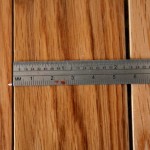
Gaps between strips in wood flooring is a common complaint. Often these gaps occur because of normal, seasonal conditions. However, occasionally gaps appear because of improperly manufactured or installed flooring. Normal Gaps "Normal gaps” (sometimes called "cracks") may occur seasonally-these … [Read more...]

Thermal Imaging- Viewing the invisible:
August 14, 2011 by ·
For those cases where the moisture damage may not be readily visible, we use thermography as a tool to aid in locating thermal anomalies which could indicate water intrusion or leakage. We can often pinpoint the source of the leakage using state of the art electronic equipment which saves time and … [Read more...]
